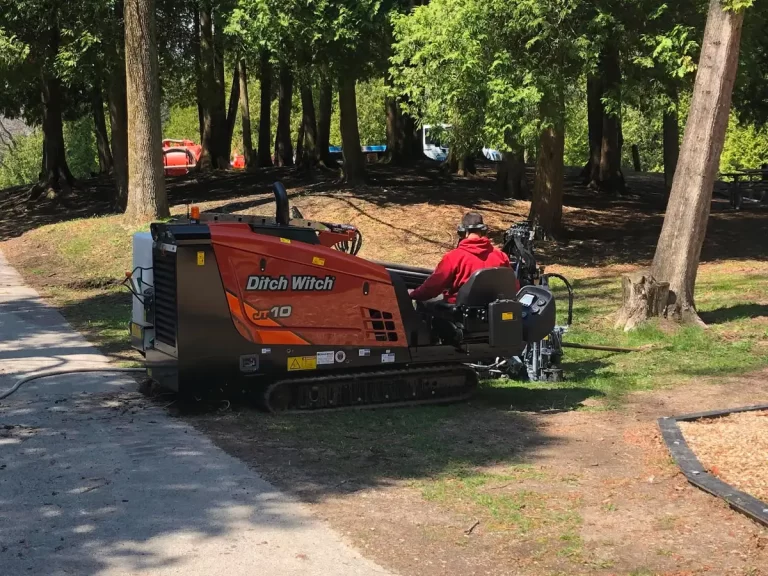
When a water line, sewer lateral, or utility conduit needs to go underground, the default approach has always been to dig a trench from one end to the other. That works fine when there is nothing in the way. It becomes a different story when the path runs beneath a paved driveway, an active city street, a neighboring property line, or a yard full of mature trees.
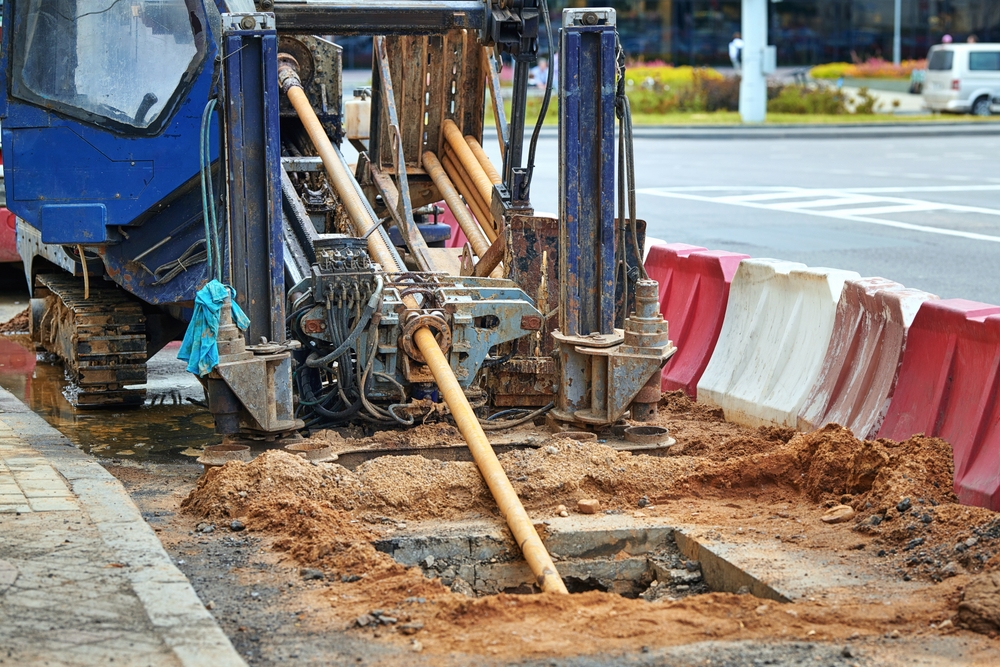
Directional drilling solves that problem. Also called horizontal directional drilling (HDD), this method uses a steerable underground drill to create a bore path between two points without tearing up the surface above. The result is a fully installed utility line with minimal evidence that any work was done.
Interest in directional drilling has been climbing steadily, and it is not hard to see why. Property owners, municipalities, and contractors across Green Bay, Appleton, and the Fox Valley are choosing HDD over open trenching because it protects their properties, shortens project timelines, and often costs less when total restoration expenses are factored in.
At Van Rite Plumbing, directional drilling is one of our core specialties. If you have a project that requires underground pipe installation, contact our team for a site evaluation.
The Three Stages of a Directional Drill
Every horizontal directional drilling project follows the same basic sequence, whether the bore is running beneath a residential driveway or under a four-lane highway.
Stage 1: Pilot Bore
A compact drilling rig launches a steerable drill head into the ground at a shallow angle. An electronic tracking system communicates the drill head’s exact position, depth, and direction back to the operator in real time. If the bore path needs to curve around an existing utility, change depth, or correct its trajectory, the operator makes those adjustments on the fly. This level of precision is what separates directional drilling from older blind-boring methods.
Stage 2: Reaming
After the pilot bore reaches the planned exit point, the drill head is swapped out for a reamer, a wider cutting tool that expands the borehole to accommodate the new pipe. For larger-diameter installations, the crew may run multiple reaming passes to gradually widen the hole.
Stage 3: Pullback
The new pipe is attached and pulled back through the bore from exit to entry. Once pullback is complete, the utility line is seated underground. The only surface evidence is two small access points, which are restored shortly after.
Why Directional Drilling Is Replacing Traditional Trenching
Open-cut trenching still has a place for simple, short runs in undeveloped ground. For most other situations, directional drilling has become the preferred method. The following are factors driving that shift:
Properties Stay Intact
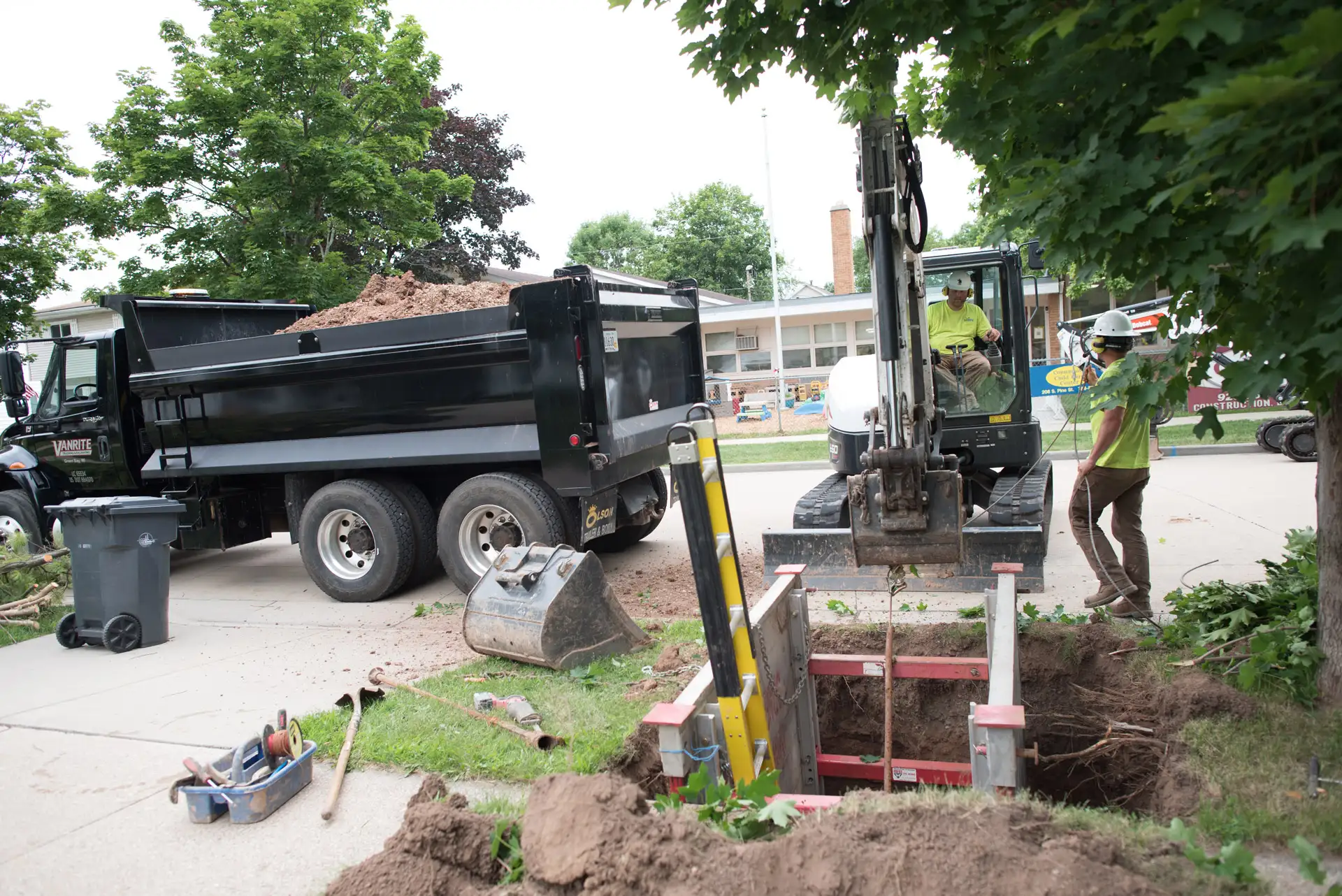
Traditional trenching digs up everything between the entry and exit points: driveways, sidewalks, landscaping, tree roots, and irrigation systems. All of it has to be rebuilt after the pipe goes in. Directional drilling avoids the demolition entirely. For homeowners who have invested in their property, this is often the deciding factor.
The True Cost Is Often Lower
A trenching estimate can look competitive on paper until restoration costs start adding up:
- Driveway or sidewalk demolition and re-pouring
- Landscape restoration and re-sodding
- Tree removal or root remediation
- Road closure permits and traffic control
When those expenses are factored in, directional drilling is frequently the more economical option overall.
Faster Timelines, Even Through Frozen Ground
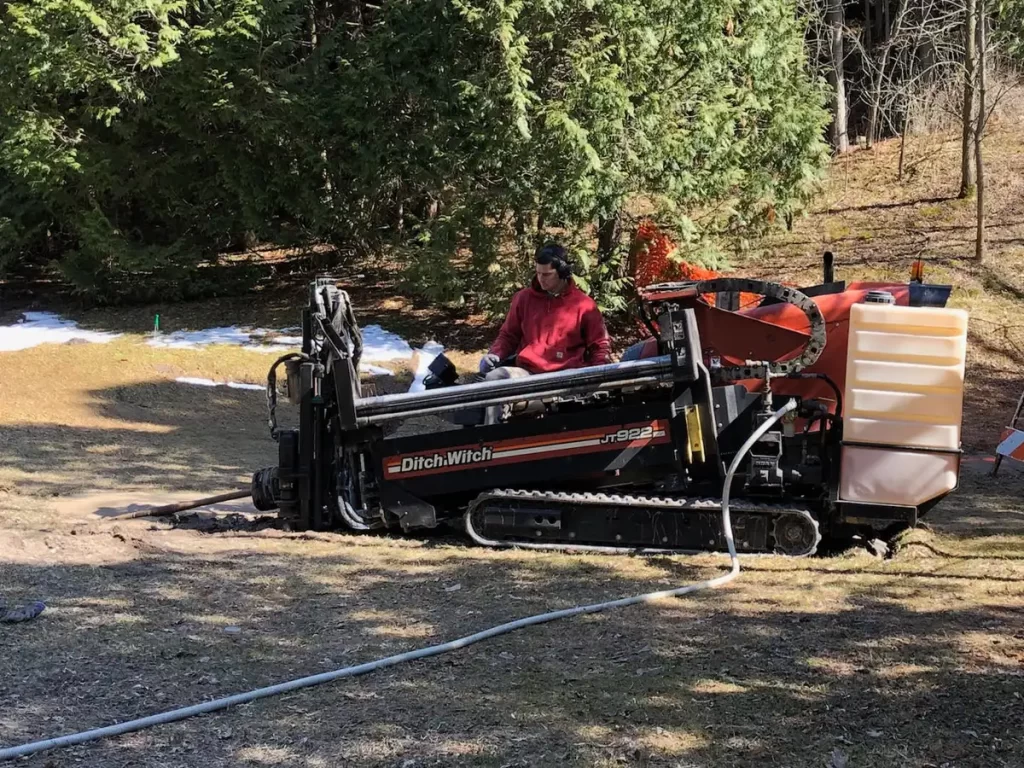
Most residential directional drilling bores are completed within a single day. A comparable trenching project might stretch across several days once excavation, backfill, and surface restoration are accounted for. Directional drilling equipment also bores through frozen Wisconsin soil directly, keeping winter projects on schedule even when municipal grant funding deadlines do not pause for weather.
Common Directional Drilling Applications for Property Owners
Many homeowners across Wisconsin, including areas like Green Bay, Appleton, Neenah, Kimberly, and Sheboygan, typically first encounter directional drilling when their city notifies them about a water service line replacement. This common residential application is often coordinated directly between the homeowner, the municipality, and the drilling contractor.
Other residential projects that frequently use directional drilling include:
- New sewer lateral installations beneath established driveways or landscaping
- Water line connections for additions, detached garages, or new construction on developed lots
- Replacement of failing utility lines that run beneath a structure, patio, or retaining wall
For property owners dealing with a sewer issue specifically, directional drilling is sometimes paired with other underground methods. A camera inspection might reveal that the existing line can be saved with a pipe lining repair rather than full replacement, or that the line’s path needs to change entirely, which is where HDD comes in.
How Municipalities and Contractors Rely on Directional Drilling
Van Rite Plumbing has partnered with public works departments across northeast Wisconsin, including Green Bay, De Pere, Appleton, Kimberly, Oconto, and Port Washington. For these municipalities, directional drilling is a critical tool for infrastructure projects where open-cut methods would be disruptive, expensive, or logistically difficult.
Typical municipal directional drilling work includes:
- Water main extensions and service line replacements beneath active streets
- Storm sewer and sanitary sewer installations in areas with congested existing utilities
- Lead service line replacement programs funded through EPA and Wisconsin DNR grants
- Conduit installations for fiber optic and communication infrastructure
Schedule a Directional Drilling Consultation
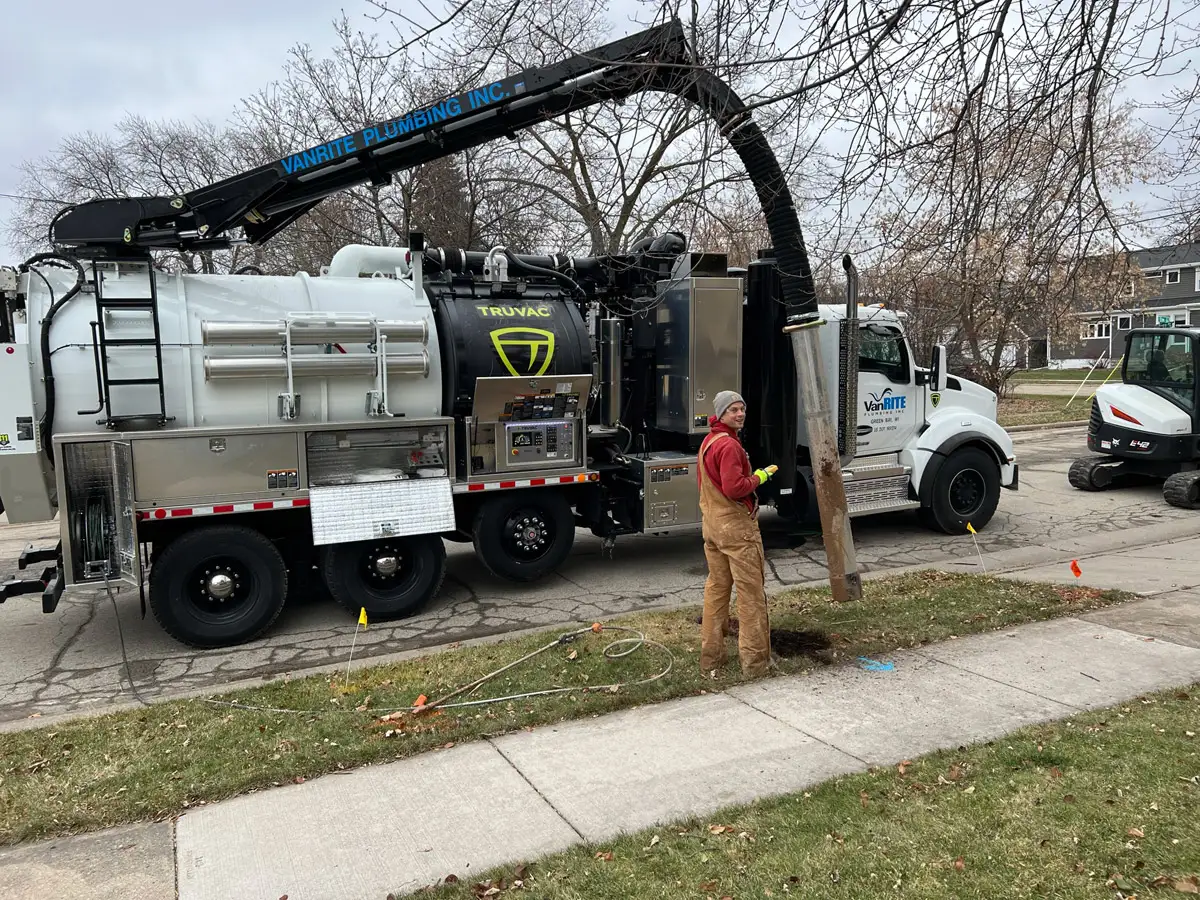
Van Rite Plumbing has been the trusted underground utility contractor for homeowners, municipalities, and commercial contractors throughout northeast Wisconsin since 2006. Our team specializes in directional drilling in Green Bay and the surrounding communities, backed by a full range of trenchless underground services and hydro excavation capabilities.
If your project requires underground pipe installation without the disruption of open trenching, contact Van Rite Plumbing to schedule a site evaluation.